ElevenLabs Eleven Realtime: AI Voices That Answer in Half a Second
ElevenLabs' new Eleven Realtime models talk back in about 0.6 seconds in 90+ languages. What it means for AI NPCs, streamers and Discord bots.

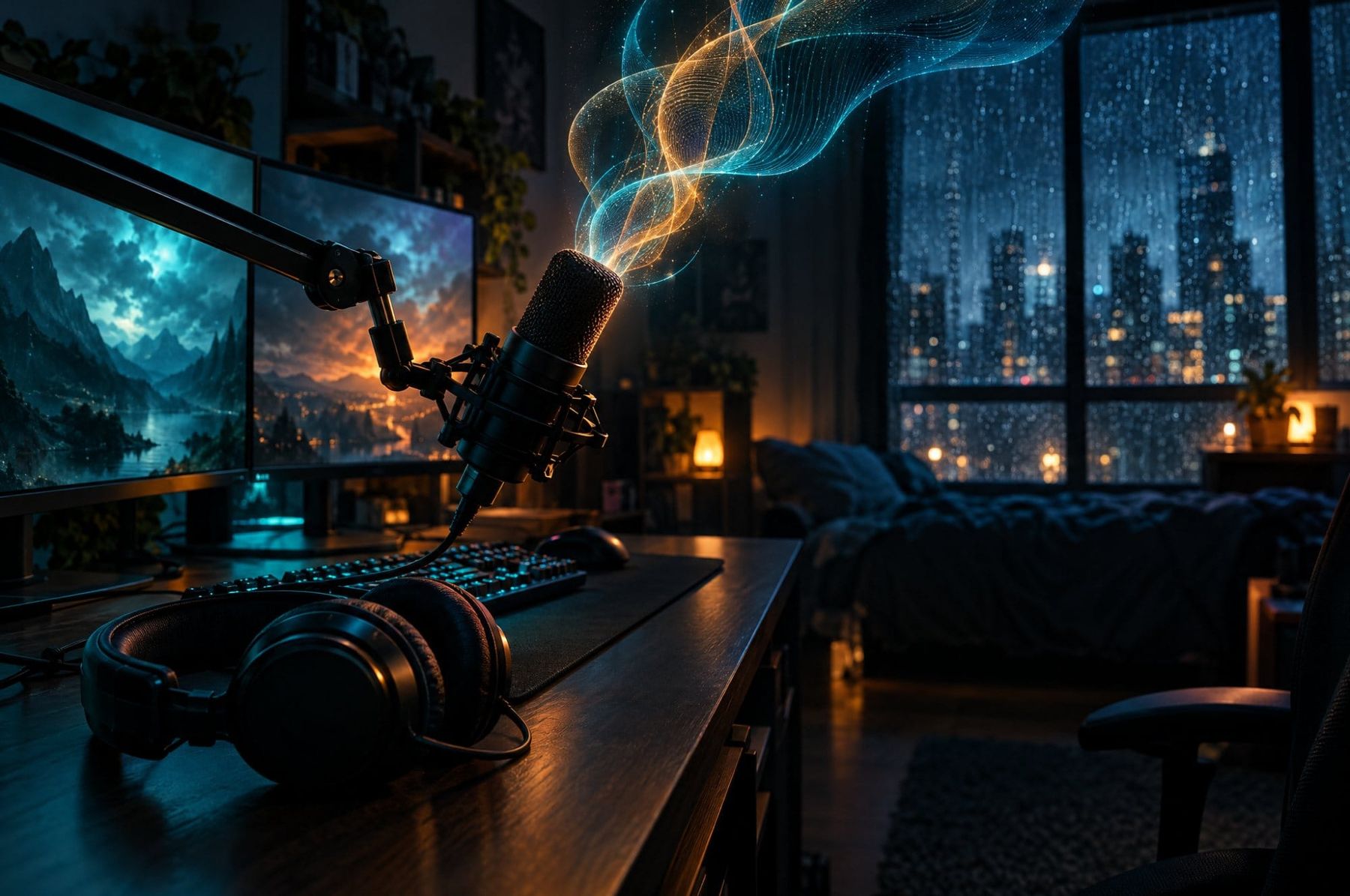
ElevenLabs launched Eleven Realtime on Tuesday, October 20, 2026: a pair of speech-to-speech models built to hold an actual back-and-forth conversation, starting to talk in roughly half a second. For gamers and creators, this is the kind of tech that ends up in NPCs, stream co-hosts and Discord voice bots, so it's worth knowing what it actually does.
What ElevenLabs launched
- Two models: Eleven Realtime v1 Mini and v1 Max
- Speech-to-speech in one system: speech recognition, turn-taking, voice activity detection and voice output, instead of stitching separate tools together
- Languages and voices: 90+ languages, and any of the 17,000+ voices in the ElevenLabs library
- Where you get it: the ElevenAgents platform, or an OpenAI-compatible Realtime API (WebSockets; WebRTC users have to switch)
- Pricing: billed per minute plus token costs, with Max costing more than Mini. ElevenLabs hasn't framed it as a cheap toy, so check the pricing page before you build on it
The pitch is simplicity. ElevenLabs says builders "shouldn't have to become a configuration expert" to get a natural-sounding voice agent.
The numbers that matter
These come from independent evaluations by Artificial Analysis, as reported at launch:
- Time to first audio: Max 0.57 seconds, Mini 0.62 seconds
- Big Bench Audio (spoken reasoning): Max 98.8%, Mini 75.9%
- Full-Duplex-Bench (interruptions, pauses, turn-taking): Mini 95.8%, Max 94.1%
- Tool use: Max 87.1%, Mini 60.3%
Translation: Max is the smart one, aimed at customer support and multi-step tasks. Mini is the conversationalist, and ElevenLabs explicitly lists interactive characters among its use cases.
Why gamers and creators should care
Half a second is roughly where talking to a bot stops feeling like a walkie-talkie. That opens up NPCs you can actually talk to, voice co-hosts that react on stream, and Discord bots that answer out loud. Because the API copies OpenAI's Realtime spec, a dev already using that can switch by changing the endpoint and model name, which lowers the cost of experimenting.
The flip side hasn't changed: AI voices are still a sore spot with performers, and faster responses don't answer questions about consent and pay.
The 2nd Shift take
The interesting number here isn't the reasoning score. It's that Mini beats Max on interruptions and turn-taking. For a game character or stream sidekick, rhythm matters more than raw IQ, and that's the part voice AI has always gotten wrong. But a voice that answers instantly isn't automatically a character worth talking to. Writing still carries it, and any studio shipping this should be upfront about whose voices are in the library. Creators: prototype it as a Discord bot before you build a whole persona around it. Not sure where AI tools fit your setup? Take the CRAFTR Quiz.
Would you talk to an AI NPC, or is that a hard pass? Argue about it with us in the 2nd Shift Discord.
Keep reading: Best Discord Bots for Gaming Servers (What We Actually Run) and Google and Unity Want You to Make Games by Typing
Sources: The Decoder, Analytics India Magazine, The Neuron
The week's biggest games, releases and fixes in one email. Free, once a week.